Showing posts with label argentina. Show all posts

2/16/2011

Rietman Population Trail - Botanical Garden of Lago Puelo


Mr. Oscar Rietman lived from his childhood to his retirement into the National Park where he worked. His father came from Switzerland in 1923 to this place of only 3 inhabitants in those years.. His mother, Ana Cuevas, was from Argentina and her uncles had animals crossing the lake;  from here the name of the Cuevas Hill (Cerro Cuevas).


The house of his childhood was built in wood, both walls and the roof tiles. It was of two floors and the bathroom was nothing more than a latrine. But the forest grew and the house no longer exists; there are only a few stones where once was the fire...


They planted many fruit trees like apples, plums and cherries; in additin to currants, roses, narcissus and daffodils. The forest and the rosehips, murra and maqui had invaded all the place...


But those that still exist are the three oaks that cannot let us see the Cuevas hill...


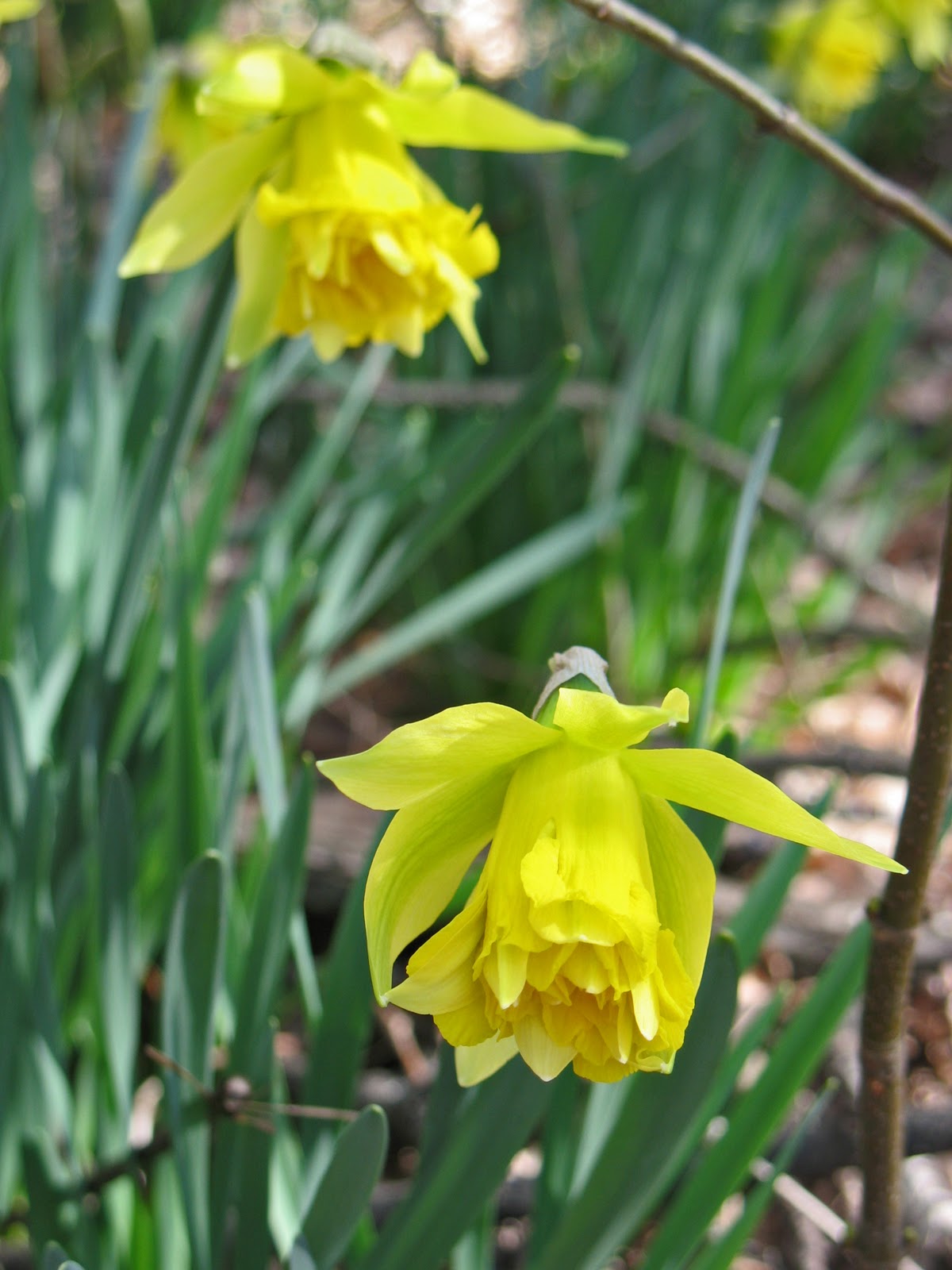
...and the double narcissus that blooms in the middle of the forest, announcing each year the beggining of the spring.


I believe that this path clearly shows us the fragility of the effort and work of the man and the power of Mother Nature.

12/30/2010

"The Voice of the Maple" trail (Botanical Garden of Lago Puelo)


The first trail that we reached walking in the Botanical Garden is the one called "THE VOICE OF THE MAPLE"...


The maple tree is not a native specie of this region. The first maples were brought and planted by the Rietman Family, early inhabitants 80 years ago...


This family brought them from Europe and planted them against the wind. But it is an invasive specie and they regenerate quickly. The maple trees reach 30 meters height and preventing the passage of light, other typical species can not survive.


Currently, there is an agreement between Lago Puelo National Park and the Institute of Artistic and Teaching Trainig Nº 805; this school has an atelier of luthiers where they use the wood of the maples that are removed for the instruments.


The trees are chosen according to the size, status and an important point: the competition of light. Usually the trees selected are thosewith long and straight trunk of 40 centimeters of diameter and healthy bark.


The wood is cut into planks to be left drying for 4 years to avoid splitting. The radial cuts are used to make the tops of the instruments and longitudinal blades of 2 milimeters are used for the side strips.


Thus the problem of the maple´s invasion over the native forests is now controlled and specialist are still working on it, planting native trees in the area. 


In the next post, we are going to know a little more of the Rietman family... 

12/18/2010

Botanical Garden of Lago Puelo

The Botanical Garden of Lago Puelo is located inside the Lago Puelo National Park from some time ago. Originally it was located in the village in the place where actually is the park of elves and fairies. The Botanical Garden has an area of 16 hectares. It has a lot of signs of the circuits to walk and of the characteristics of the different species and places we visited.


The valley of Puelo lake is only 200 meters above the sea level and its climate allows that plants and trees that are common across the Andes, can also grow in this area, mixed with the typical species of the andean patagonia.


To reach to the Botanical Garden we had taken the street leading from the route to "La Playita" near the place where it is the entrance of the Forest of the Shadows path. We went through the portal near it and walk a few meters with the forest to one side and the maintenance dependences of the National Park on the other side.


Then we arrived to the area where there are two entrances, one is the Pitranto Grande path, and the other led us to the Botanical Garden and the Old Settlers path...


The circuits of the Botanical Garden are:
  • The Voice of the Maple path
  • The Rietman Population path
  • The Cypress path
  • The Path of the Pitras,
and finally it connects with the Old Settlers path.


Next post: The Voice of the Maple path...

11/28/2010

La Playita (Little Beach) - Mirador del Lago (Viewpoint of the Lake)

 There are two ways to get to the beach known as "La Playita" (Little Beach), one is from the path of the  Pitranto Grande and the other is to arrive by car by the road near the lake. I did both walking. When I went in May, autumn showed all its colours in the forests of the National Park.

Autumn in the road to "La Playita"

Autumn in the road to "La Playita"

At the end of the path of the Pitranto Grande  and crossing the portal of trunks, we found a sunny trail of sand after the deepest darkness of the forest of pitras. This path was surrounded by vegetation among we could see rosehip, brooms and murras. But not everything is beautiful in this path, unfortunately we went through an area where we found the reamins of a forest fire. It was small but it´s sadness to see the burned trees.

Sand path to "La Playita"

Walking to "La Playita"

We found another small trail that ran beside a stream in the forest. Walking we arrived to the place that serves as car parking near the lake. From there we have followed a little but easy path between the rocks and the lake to reached to the sandy beach where tourists enjoy the summer sun. In this sector the lake is shallow and the water is warmer, that allows swimming.


Walking to "La Playita"

La Playita

But leaving the forest called Pitranto Grande, and halfway to La Playita you could found another path, it is the footpath to the place known as Mirador del Lago (Viewpoint of the lake). This path is about 800 meters long and rises 150 meters above the lake and in parts passed through the forest, in others you walked very near the wall rock of the hill and with great views. It is a path with no major difficulties except the slope.

Walking to the "Mirador del Lago"

From the top we can see the lake, the Andes mountains, and the valley where it is situated Villa Lago Puelo.

Mirador del Lago (Viewpoint of the Lake)


Enjoy this beautiful view of my place in the world!!!!!


11/19/2010

Photo Essay: Lago Puelo | Patagon Journal: Patagonia's Magazine for Travel, Outdoors, Nature and Culture

A few days ago, I received an invitation from Jimmy Langman (Editor of PATAGON JOURNAL) to send him some pictures to write a post about LAGO PUELO in their web.

He was very kind to put my name on the photos and the link to my blog; also he wrote a little review. But that of mine as a photographer was so much!!!... I love photography, but I have to learn a lot and I haven´t still a good camera fot that).

Now I invite you to see the post and the web in general, where you can find a lot of interesting information (not only of tourism) about both Argentine and Chilean Patagonia...

Enjoy it!!

Photo Essay: Lago Puelo Patagon Journal: Patagonia's Magazine for Travel, Outdoors, Nature and Culture


We welcome your comments!!!
Thank you!!!

Patricia


11/08/2010

Pitranto Grande (Big Pitranto)


Inside the "Lago Puelo National Park" there is another beautiful footpath of no difficulty, of about 30 minutes walking and a length of 1000 meters, called "Sendero del Pitranto Grande" (Big Pitranto Path).

Between the pier and "La Playita" (Little Beach) we find the entrance to the "Bosque de las Sombras" (Forest of Shadows). To the left, we can see another gate made of wood. We enter by this portal, we can see to the right the dependences of the National Park Administration offices, and to the right a lot of trees like crab apples, plums and "murras". We arrive to a place with two another gates of trunks: one is the beginning of the path called "Antiguos Pobladores" (Old Settlers) and the trail to the Botanical Gardens; the other one is the entrance to the Pitranto Grande (Big Pitranto).


But what is a Pitranto? It is simply a forest of pitras, a strange tree known by different names: the Mapuches called it petra, but it is also known as patagua, temu, picha... Belongs to the Myrtaceae family and is relative to the myrtle. The scientific name is MYRCEUGENIA EXSUCCA (Myrceugenia is a combination of myrcia gender and eugenia, exsucca without juice).   Source:  http://www.florachilena.cl/

We enter into this strange and dark forest by a path that seems to have a padded, soft and swampy floor, composed of leaves and roots; some sectors are completely flooded. With its shade, the pitras protect the quality of the water in which they grow.


Unfortunately the forests of pitras are disappearing, and the "Pitranto Grande" is one of the largest remaining in the region. Under its shadows grow ferns that can be found only under these trees, they are called "beef ribs" or Quilquil.


The pitras are trees that grow between 10 to 15 meters high, their trunks are 50/60 centimeters in diameter and they can live up to 150 to 200 years. Their very twisted branches that form strange shapes and their flaky bark are really striking and give the place a fantastic and magical look. It seems to be into a forest of a Tolkien´s tale. This forest of pitras and myrtles is very dark, even more than the "Bosque de las Sombras" along which we traveled in a previous post.  Link: Bosque de las Sombras 


Walking along the path we find some wooden bridges built across streams of very dark but transparent waters. At the end of the trail appears another portal of trunks: we left the deepest darkness of the forest and change it for the sunshine; the path becomes a sand road surrounded by vegetation, among which we can see rosehip, brooms and murras. Following this path we came to "La Playita" on the shore of Puelo lake. 


I hope you have enjoyed this Pitranto Grande Path, one of the many circuits that can be found in this beautiful "Lago Puelo National Park".

 Thanks for your visit!!!!!!!!!